Fire and Judgment: How Roasting Decides the Tea in Your Cup
Tea Science|Author:祥興茶行|Published:2026-04-08
Take one batch of leaf: roast it lightly and you get flowers, roast it hard and you get medicinal wood. Roasting isn't drying — it's a second transformation, guided by heat. Learn to read the fire and you finally understand what's in your cup.
Fire and Judgment: The Secrets of Tea Roasting
Why does one person taste flowers in a tea while another tastes caramel?
The answer comes down to one thing: roasting.
What Roasting Actually Does — It's Not Just Drying
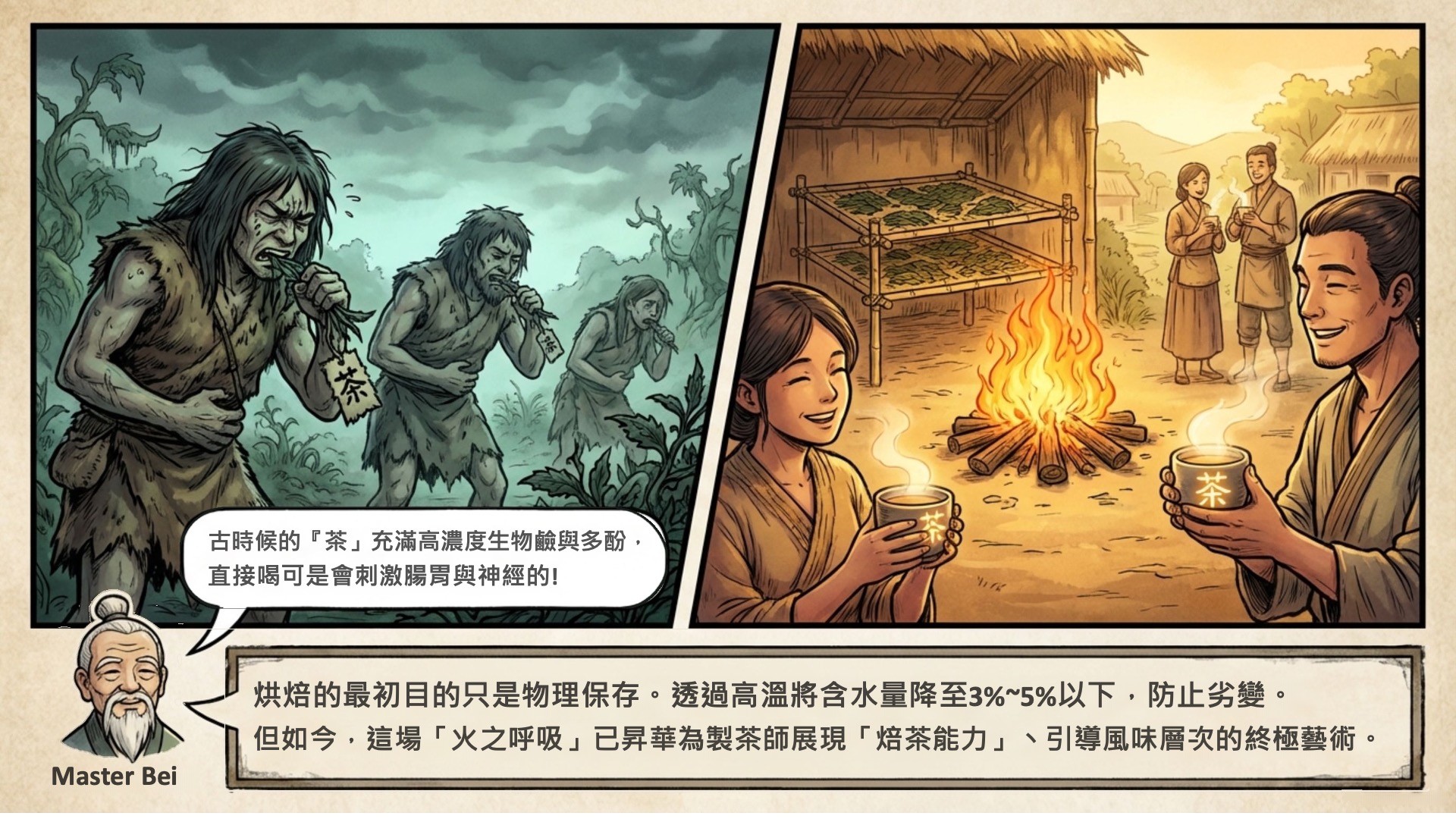
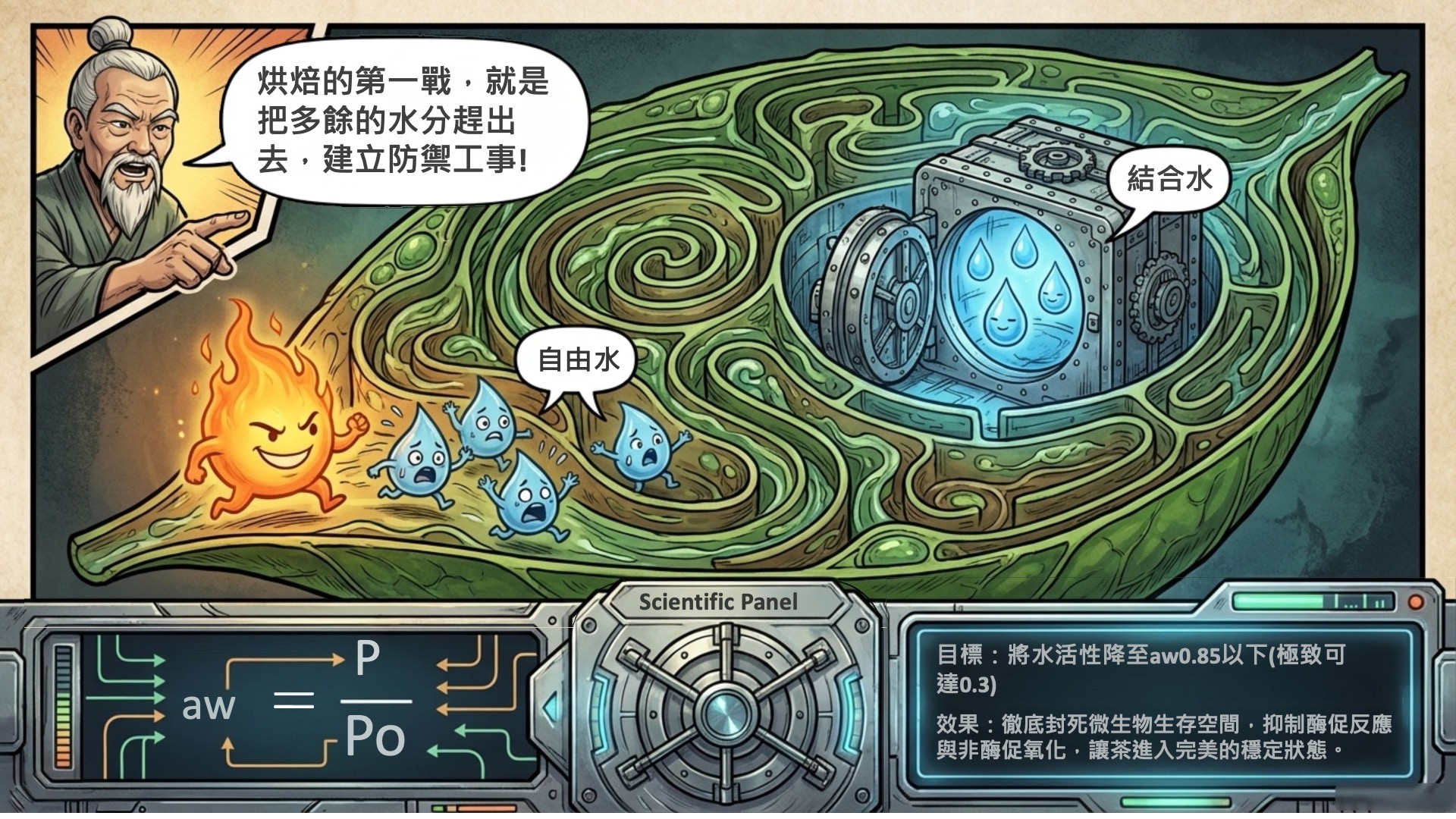
Most people assume roasting simply drives off moisture. That's only half true.
Roasting is closer to a second act of creation. By controlling temperature and time, the roaster rearranges the chemistry inside the leaf and coaxes out aromas and textures that weren't there before.
One tea, light-roasted, smells of flowers. The same tea at a medium roast turns honeyed. Push it further and you get wood and Chinese medicinal notes. Same leaf, same processing — only the fire differs. That's what makes roasting so compelling. !Roasted leaf
What Heat Does to the Leaf
Several important things happen inside tea leaves during a roast.
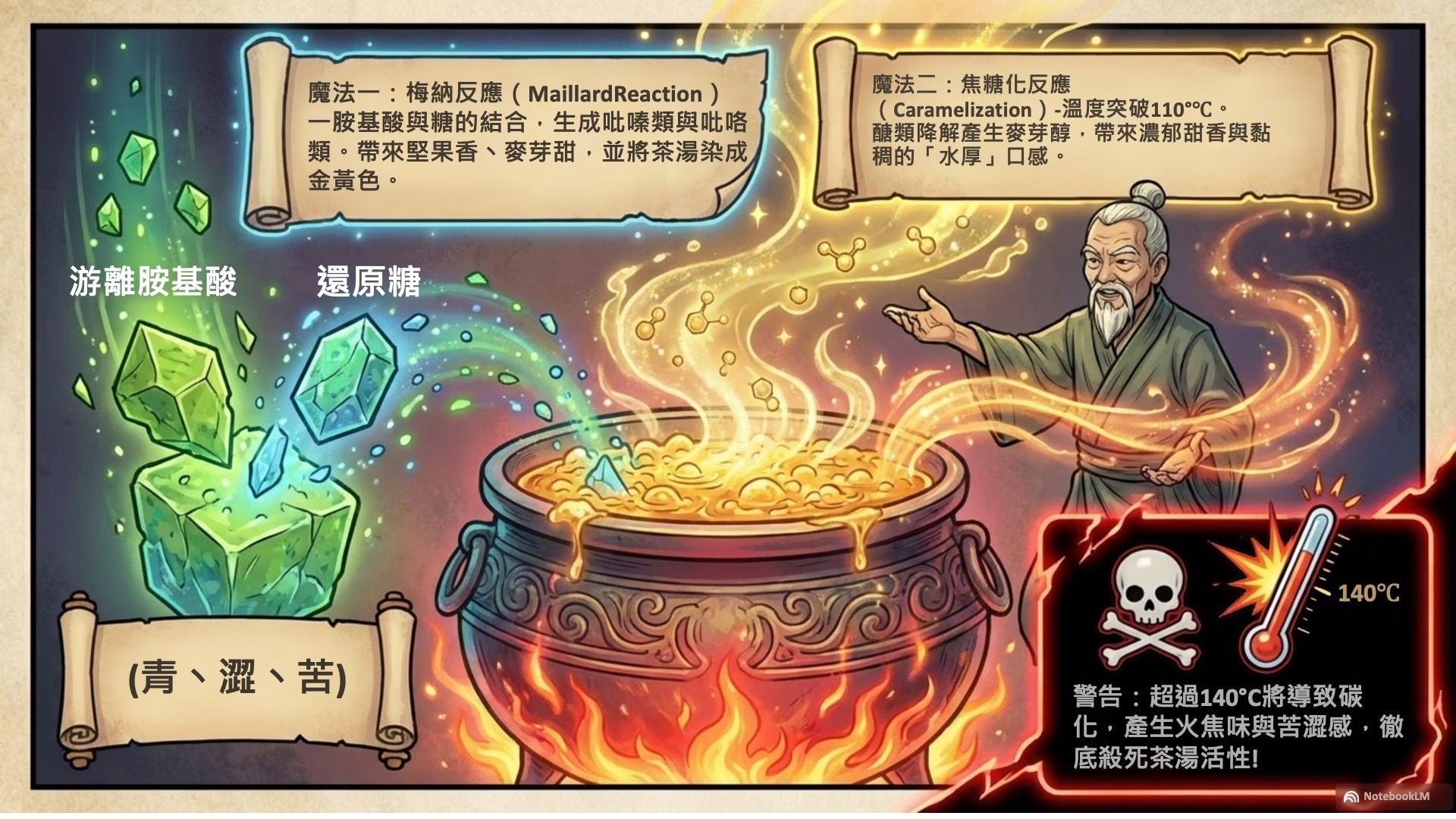
1. The Maillard Reaction: Aroma Alchemy
That smell coming out of the oven when you bake bread, and the nutty aroma of roasted coffee beans, both come from the same process — the Maillard reaction.
Here's the mechanism: amino acids and sugars in the leaf combine and reorganize under heat, generating hundreds of new aromatic molecules.
- A light reaction → floral, fresh high notes
- A moderate reaction → honeyed aroma, nuts, malt sugar
- An excessive reaction → scorched bitterness, carbonized flavor (this is a ruined roast)
2. Caramelization: Where the Sweetness Comes From
Above 110°C, sugars in the leaf begin to caramelize and form sweet-smelling compounds. This is why medium- and heavy-roasted oolongs taste enveloping and sweetly rounded in the mouth — the trade term is shui hou (水厚), a thickness in the liquor.
Let the temperature run past 140°C, though, and sweetness turns to bitterness. That batch is finished.
3. Caffeine Evaporates
Caffeine sublimates at high temperatures, passing straight from solid to gas. That's why heavily roasted teas feel gentler and are less likely to interfere with sleep if you drink them late — some of the caffeine has already left during the roast. !Charcoal roasting
Three Levels of Fire, Three Personalities
Roast level | Temperature range | Signature aromatics | Who it suits
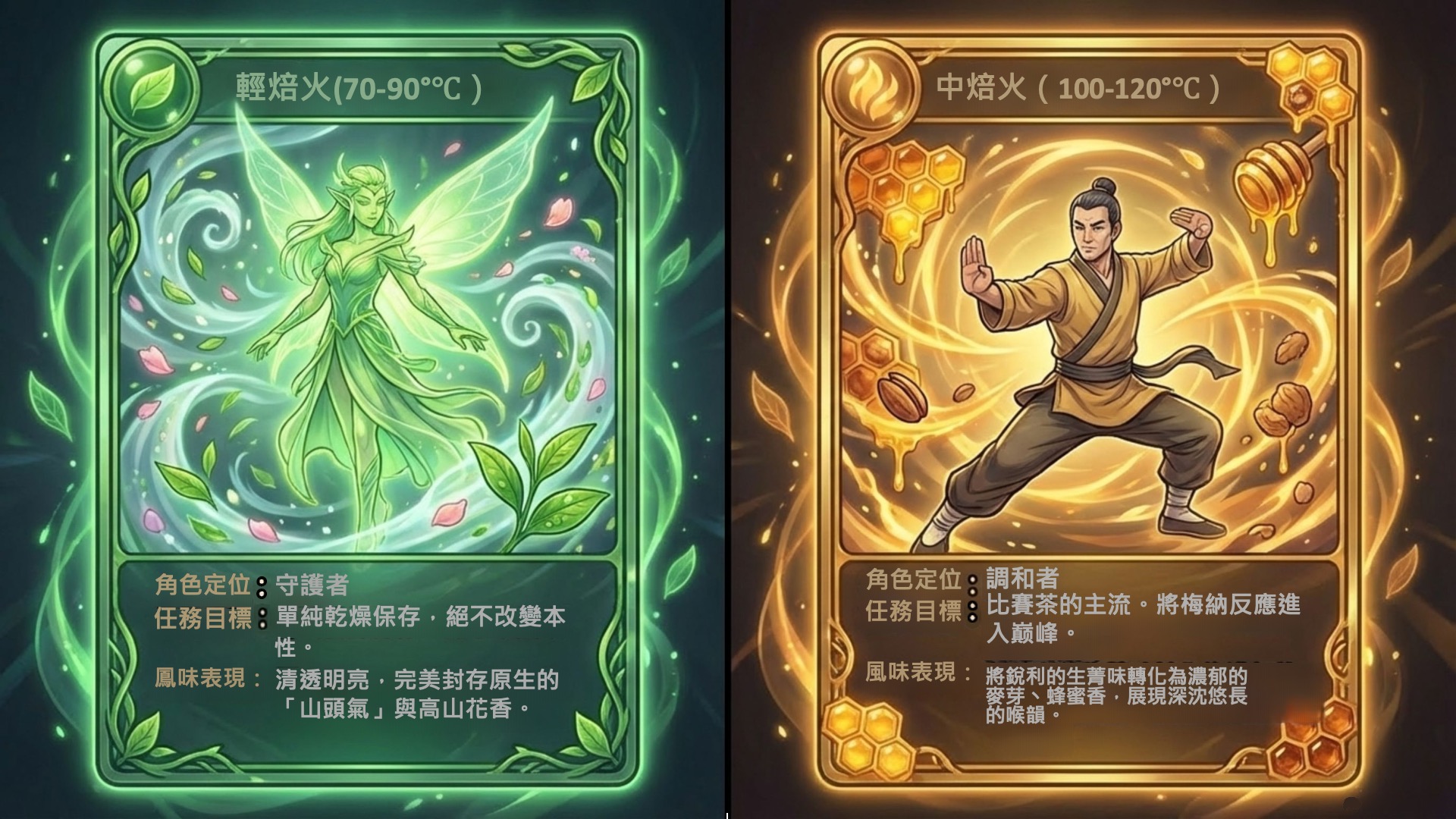
Light roast | 70–90°C | Floral, grassy, mountain character | Drinkers who want brightness and the leaf's original flavor
Medium roast | 100–120°C | Honeyed aroma, malt, cooked fruit | Drinkers who want mellow sweetness and layers
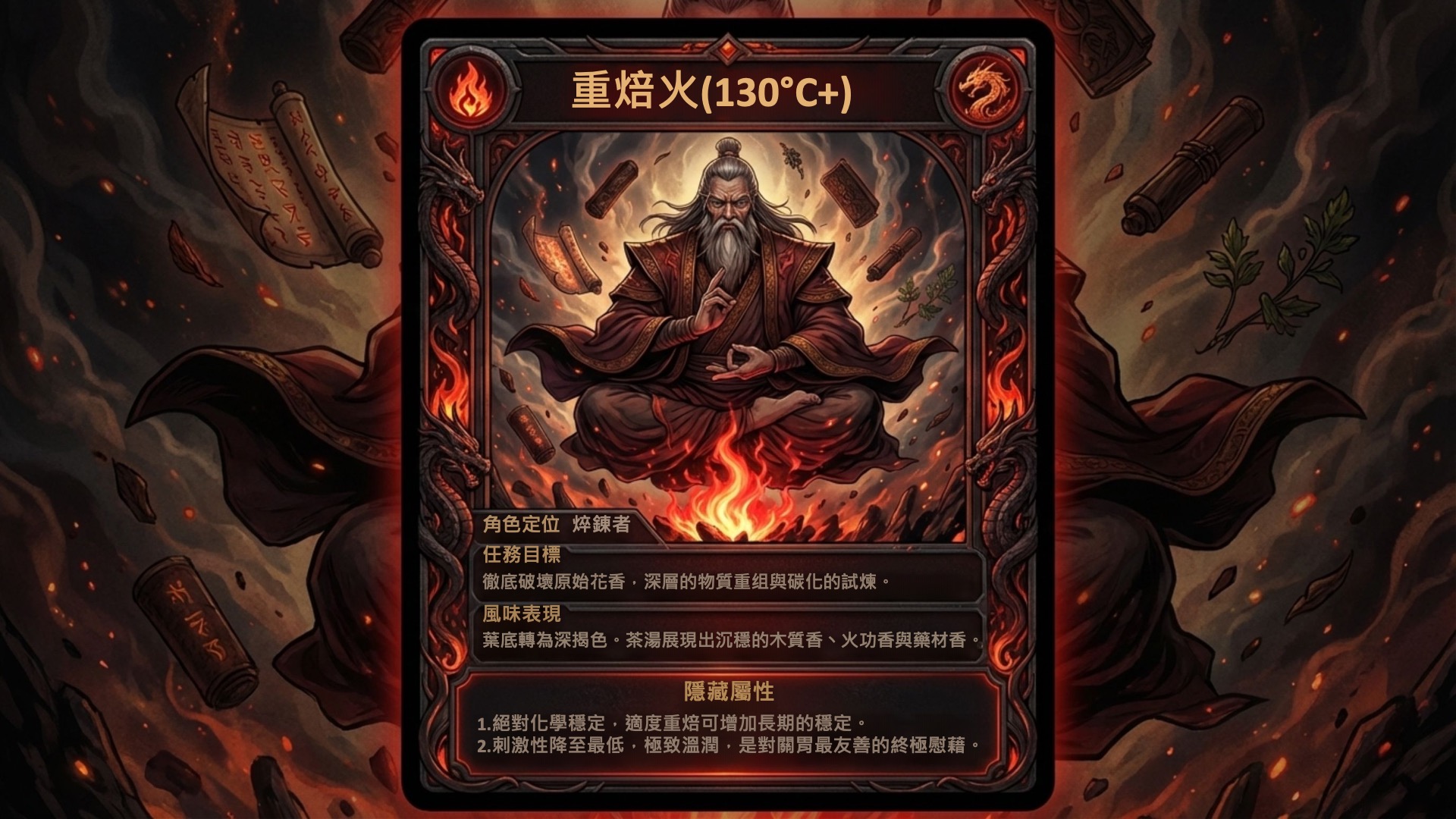
Heavy roast | Above 130°C | Wood, Chinese medicinal notes, roast character | Drinkers who want depth and body, or have a sensitive stomach
One note: no roast level is objectively better. There's only the one that suits you.
!Light and heavy roast comparison!Roasted leaf detail
Why Charcoal Roasting Costs So Much More Than Electric
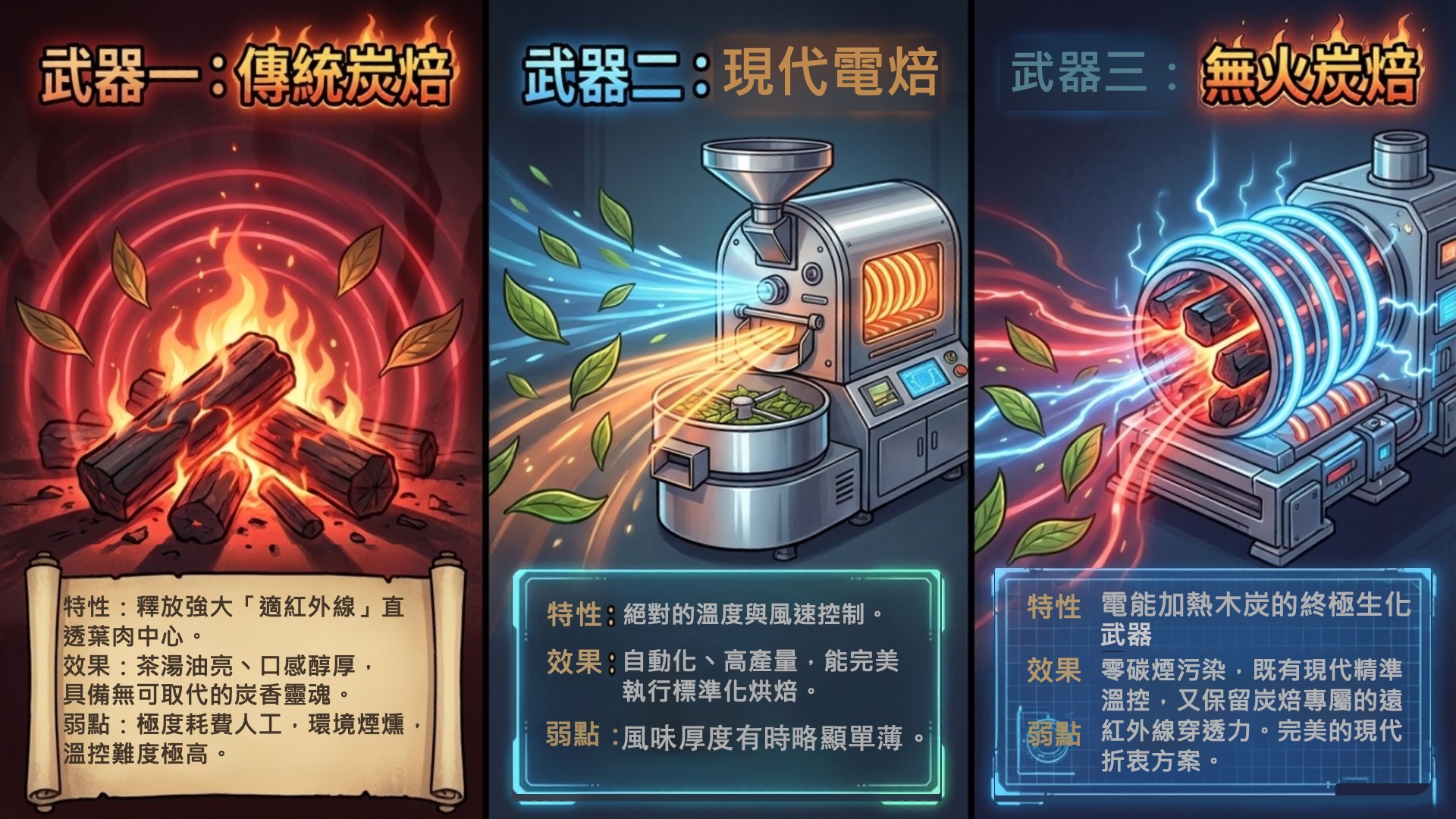
Traditional charcoal roasting uses longan or lychee wood charcoal, which throws off large amounts of far-infrared radiation as it burns.
Why does that matter? Far-infrared penetrates the surface of the leaf and sets the molecules inside vibrating, generating heat from within. The leaf is heated from the inside out rather than baked from the outside in.
Tea roasted this way shows finer, more even aromatics, often a glossy sheen on the surface of the liquor, a rounder mouthfeel, and better keeping qualities.
The drawback is cost. It's enormously expensive, and temperature control rests entirely on the roaster's experience. One lapse and the whole batch is lost.
Electric roasting, by contrast, is stable, efficient, and scalable — but as a rule it doesn't reach the same level of aromatic detail. !Tea roasting alchemy
Do Spring and Winter Teas Get the Same Roast?
No. A tea maker adjusts the fire to the raw material in front of them — the principle known as "reading the tea to make the tea."
Spring tea grows fast, with thick stems and high moisture. It needs higher temperatures for the heat to penetrate that substantial tissue. Rich in amino acids, it can take a real roast, and the fire draws out complex layers.
Winter tea grows slowly, with dense tissue and natural sweetness. It suits a light roast; high heat would destroy that delicate, clean sweetness. Push the fire too hard and the sweetness you paid for simply vanishes.
Two Teas That Show the Craft
Dong Ding Oolong (凍頂烏龍): Taiwanese Tradition in Miniature
What sets traditional Dong Ding apart happens before the roast: an elaborate cloth-ball rolling stage that shapes the leaf.
From plucking to finished tea, the leaf passes through twenty to thirty-odd steps, and the cycle of drying → cloth rolling → breaking up the clumps repeats three to eight times. The leaf is bundled into a ball in cloth, pressed, opened, cooled, and wrapped again, over and over, until it tightens into its semi-ball shape.
That shape isn't merely decorative. Once the leaf opens in the pot, the edges show the classic "green stem, green belly, red rim" — the signature of Dong Ding tea and a direct read on whether the craft was executed properly.
Only after shaping does the roast begin, and it runs more than 20 hours. Medium oxidation paired with a medium charcoal roast gives the tea a mellow, substantial body, with aromatics leaning toward toasted grain (mian cha) and walnut. The finish carries a long returning sweetness (hui gan) and a lingering finish that refuses to fade.
Muzha Tieguanyin (木柵鐵觀音): The Most Elaborate Refinement
Tieguanyin goes through four alternating rounds of roasting and resting.
The sequence runs: roast → rest to let the fire settle → roast again → rest again, and so on.
Each rest after a roast lets the chemistry inside the leaf restabilize before the next application of heat. This repeated forging is what produces the distinctive "Guanyin yun" (觀音韻) — a faint tartness on entry, followed by a returning sweetness and a watering mouth, all wrapped in deep roast aromatics and fruit acidity.
Can Roasting Rescue Tea That Has Gone Off?
Yes, within limits.
If poor storage has left a tea stuffy or with a stale, rancid edge, a roast at 100°C combined with strong airflow can effectively drive off those low-boiling-point off-notes.
The price is that some of the tea's original aroma goes with them.
This is the trade-off every tea maker has to make: preserve freshness, or remove the flaw. There's no perfect answer, only the most sensible choice in the moment.
One Idea to Take With You
Roasting doesn't make tea better. It guides the tea's potential in a particular direction.
A light roast preserves the leaf's own voice. A heavy roast pursues a reinterpretation written by time and fire.
Neither ranks above the other. There is only fit.
Next time a cup lands in front of you, take a second longer with it and ask: how much fire went into this?
This article draws on research reports from the Tea and Beverage Crops Improvement Station under Taiwan's Ministry of Agriculture, along with academic papers on tea roasting and industry sources.