The Metamorphosis of Tea: A Chemical Revolution Deep Inside the Cell
Tea Science|Author:祥興茶行|Published:2026-03-30
What tea makers call "fermentation" is really a cascade of enzymatic oxidation, set off the moment tea-leaf cells break apart. Here is the cell-level chemistry behind every cup, from withering and rolling to the microbial pile that makes pu-erh.
The Metamorphosis of Tea: A Chemical Revolution Deep Inside the Cell
From the moment a leaf is plucked, billions of cells begin to collapse, recombine, and evolve — every cup we drink is the final chapter of that microscopic story.
The mellow sweetness on your palate, the amber glow in the cup, the floral-fruity aromatics that refuse to fade — none of it is accidental. It all traces back to a precise, orderly, almost tragic program of biochemical self-destruction that tea cells set in motion after physical injury. This article takes you into that invisible microscopic world to understand what is really happening behind the word "fermentation."
1. "Fermentation" Isn't the Fermentation You're Thinking Of
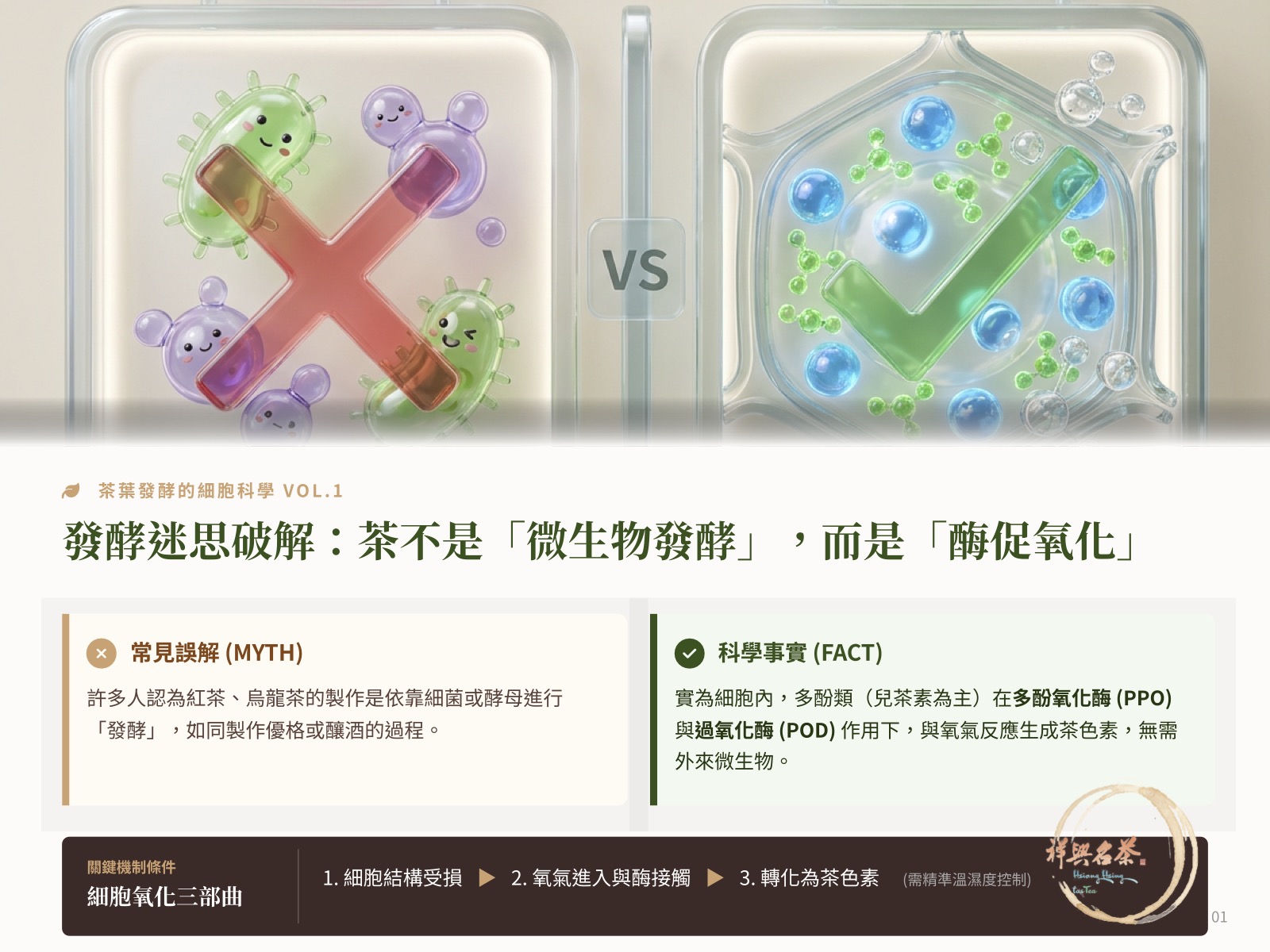
Say "fermentation" and most people picture beer, bread, or kimchi — microbes breaking down sugars in the absence of oxygen. But the "fermentation" of black and oolong teas is fundamentally different: it is an oxidative polymerization driven by the leaf's own enzymes. The more precise scientific term is enzymatic oxidation.
🔑 The Core Concept: A Compartment Wall Comes Down
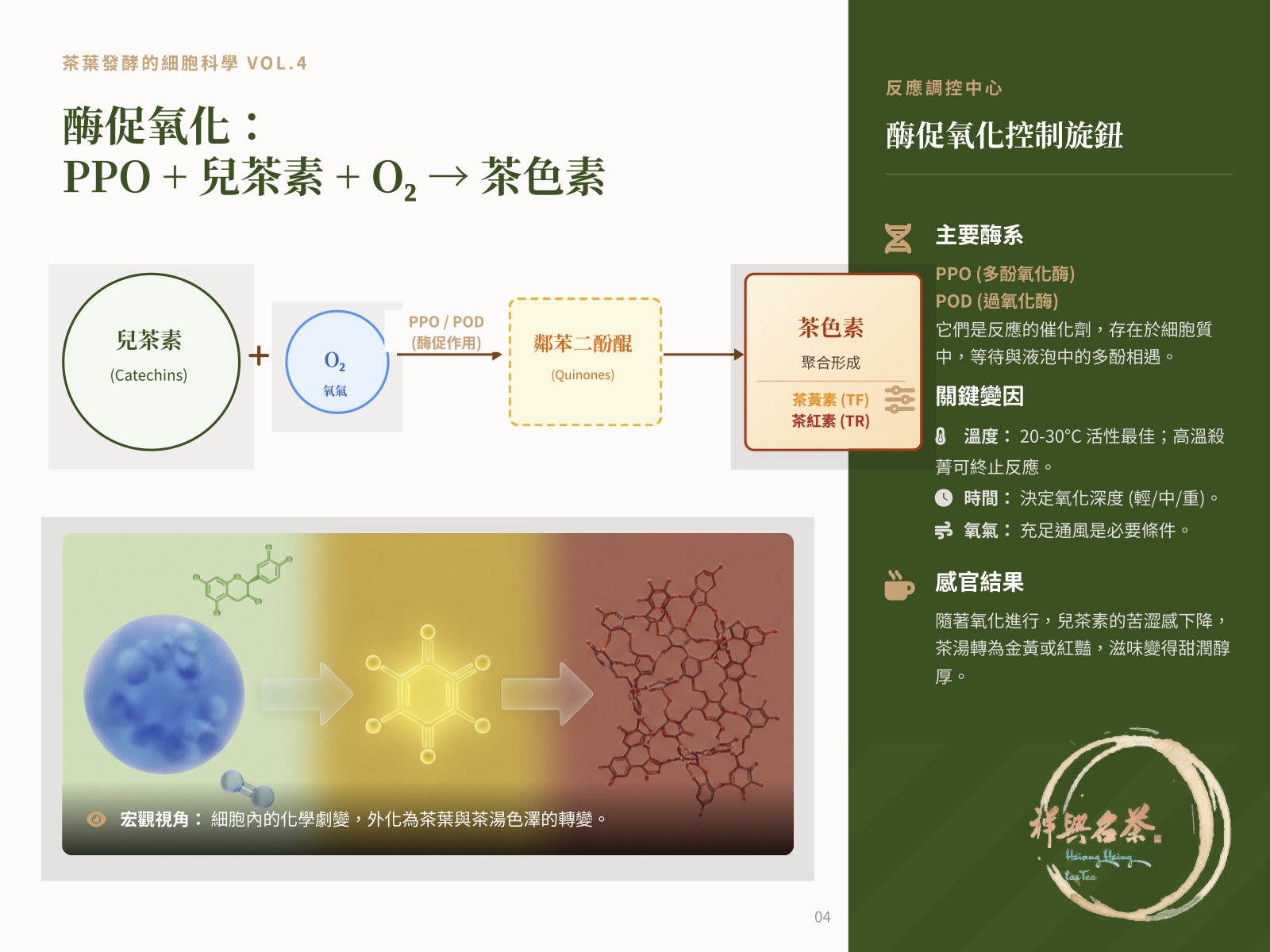
In a healthy tea cell, polyphenols (chiefly catechins) sit locked inside the vacuole, a storage compartment, while the enzymes that catalyze oxidation (PPO and POD) reside elsewhere — in the cytosol and the chloroplasts. Biological membranes keep the two strictly apart, with no way to meet.
Once the cell membranes rupture, that barrier collapses in an instant. Catechins flood out of the vacuole, meet the enzymes, and — with oxygen joining in — light the fuse on the entire oxidative polymerization cascade.
Black and oolong teas → endogenous enzymatic oxidation (no microbes involved)
Dark teas (pu-erh) → post-fermentation driven by external microbes (a completely different mechanism — see chapter seven)
2. Withering: The Cell Loosens Its Defenses
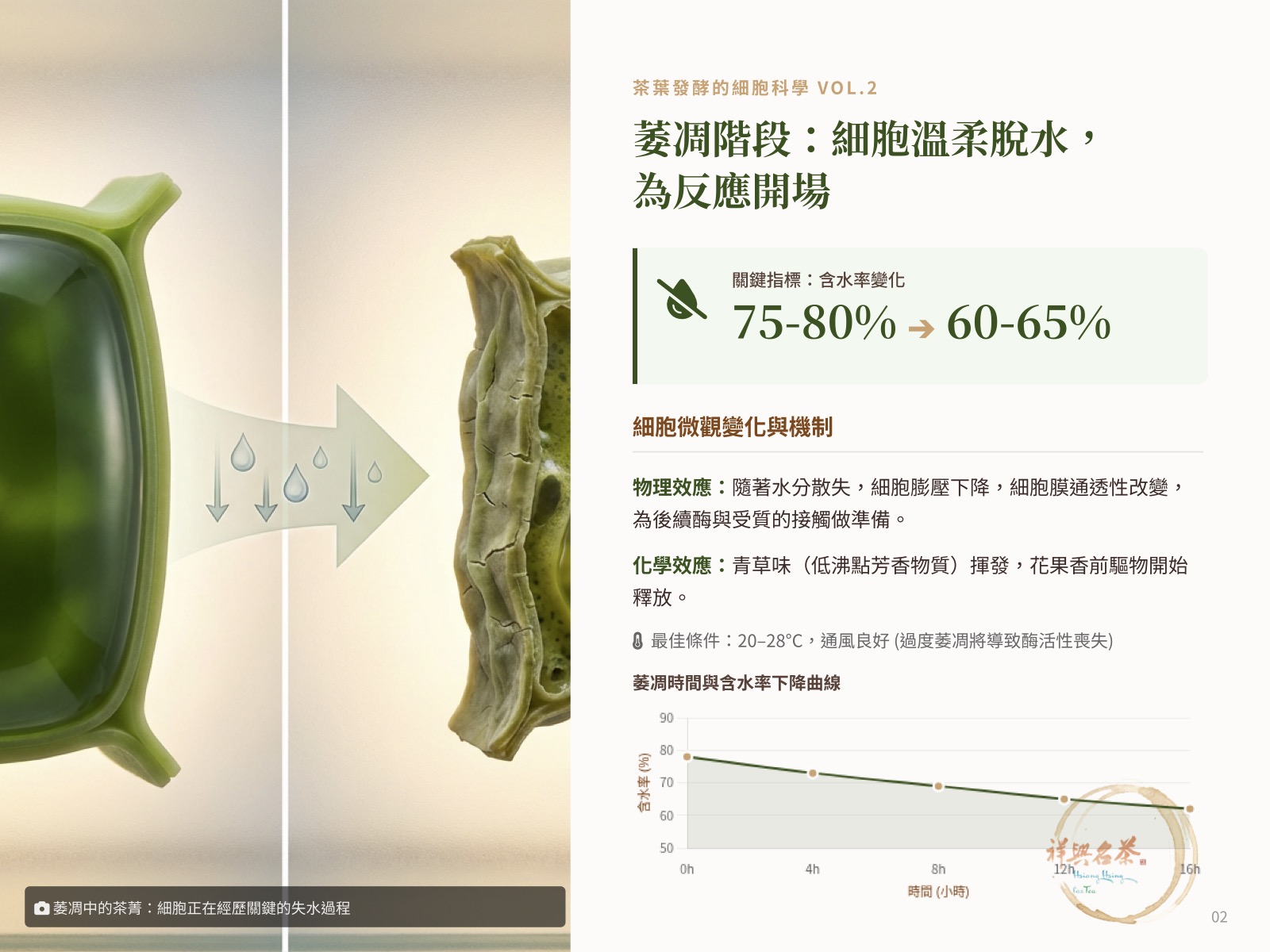
After plucking, the leaves first enter the withering stage. Their moisture content drifts slowly down from roughly 75–84% to 60–72%. It looks like simple drying, but underneath it is a violent cellular stress response.
The Physical Side: Membranes Relax
Water loss shrinks the cells and pulls the protoplast away from the wall. Electrical measurements show that as moisture falls, ion leakage across the cell membrane rises markedly — a sign that the once-sealed membrane system is loosening. Catechins begin seeping slowly out of the vacuole, priming the reactions to come.
The Chemical Side: Genes Quietly Reprogrammed
Withering is anything but passive waiting. Transcriptome studies show that dehydration stress switches on a whole series of genes:
- Starch-degrading enzymes (AMY/BAM) ramp up.
Starch is broken down into soluble sugars, which raise the osmotic pressure of the cell sap to resist dehydration — and also supply carbon precursors for later Maillard reactions, directly shaping the sweet base notes of the finished tea.
- Proteins break down into free amino acids.
Peptidase activity climbs and proteins are steadily dismantled. Free amino acids such as phenylalanine and leucine accumulate — key precursors of tea's floral and fruity aromatics.
- Polyphenol oxidase (PPO) holds its stability.
Keep withering temperatures below 38°C and the PPO active site survives intact, preserving ample catalytic firepower for the oxidation ahead.
3. Rolling: One Loud Crack, and the Barriers Fall
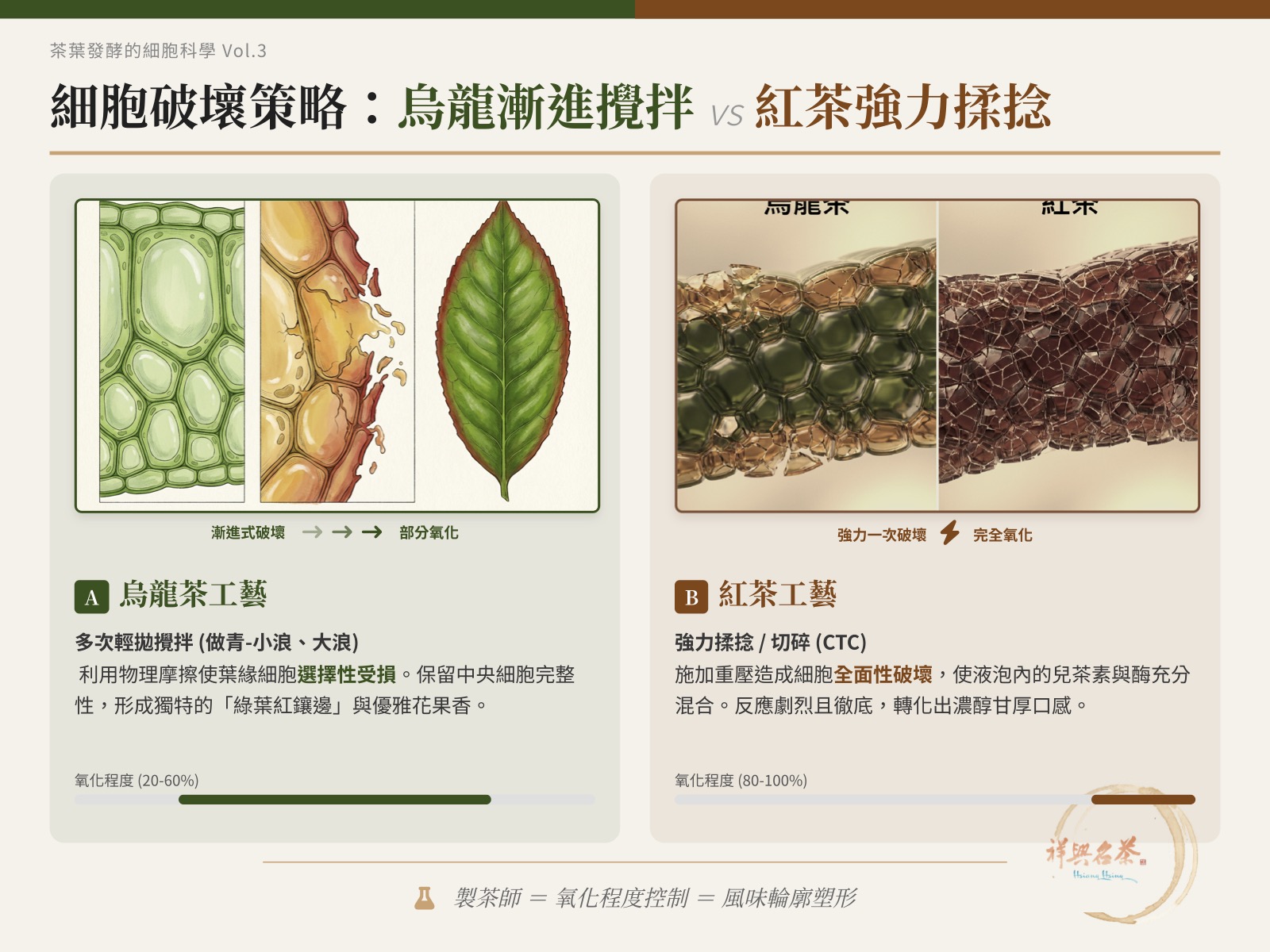
If withering slowly loosens the cell's defenses, rolling is the moment those defenses formally collapse. Mechanical force fractures the cell walls, protoplasm spills out, and every isolating mechanism ends at once.
How Complete Is the Destruction?
When the applied force exceeds the limit strength of the wall's cellulose and lignified structures, the cell bursts like a stepped-on bubble. CTC processing (crush, tear, curl) is far more aggressive than orthodox rolling: it shatters a higher proportion of cells, multiplies enzyme–substrate contact geometrically, and slashes fermentation time — which is why CTC black teas tend to brew fast and taste direct.
🔑 The Turning Point: The Second PPO Meets the Catechins
Rolling destroys the vacuolar membrane. Catechins gush into the cytosol, where they interact intensely with PPO. Oxygen now diffuses in through the damaged tissue and becomes the rate-limiting factor of the reaction.
With oxygen in play, PPO rapidly oxidizes the B-rings of the catechins into highly reactive o-quinones — the true starting point of the leaf's journey from green plant to reddish-brown drink.
4. PPO and POD: The Leaf's Two Chief Chemists
On fermentation's center stage, two enzymes play indispensable roles.
Polyphenol Oxidase (PPO): The Lead
PPO is a copper-containing metalloenzyme that catalyzes the initial oxidation of catechin hydroxyl groups. Its activity shifts dynamically through processing:
Processing stage | Relative PPO activity | POD trend | What's happening in the cell
Fresh leaf | 100% (baseline) | Stable | Enzyme and substrate fully separated
After withering | ↑ 111.89% | Slight rise | Physiological stress boosts activity
After rolling | ↓ 96.83% | Peak | Enzymes fully released, massive substrate contact
During fermentation | Fluctuating decline | Holds or rises | Oxidation products accumulate and inhibit
After drying | ↓ 7.95% | Sharp drop | Heat inactivation; the reaction ends
Peroxidase (POD): Supporting Role and Closer
POD uses the hydrogen peroxide generated during PPO's work as an electron acceptor, catalyzing further oxidation. In the late stages of fermentation especially, as PPO activity fades, POD stays busy, pushing thearubigins onward toward theabrownins and other high polymers — a major source of the deep, rounded body of dark teas.
5. Not All Catechins Oxidize Equally
Tea contains seven principal catechins, and their oxidation rates differ enormously. The key lies in the number of hydroxyl groups on the B-ring: three adjacent hydroxyls (a trihydroxy structure) are far more readily recognized and oxidized by PPO than two.
Catechin | Oxidation rate constant (k) | Structural features
GCG | 0.492 (highest) | Trihydroxy B-ring, ester type
GC | 0.447 | Trihydroxy B-ring, non-ester type
EGC | 0.435 | Cis trihydroxy B-ring
EGCG | 0.251 | Cis trihydroxy B-ring, ester type
EC | 0.213 | Dihydroxy B-ring, non-ester type
C | 0.158 | Trans dihydroxy B-ring
ECG | 0.153 (lowest) | Dihydroxy B-ring, ester type
The practical takeaway: GCG oxidizes 3.2 times faster than ECG. Early in fermentation, EGC and EGCG are consumed rapidly — and this dynamic process is exactly what determines the pigment makeup and layered taste of the finished liquor.
6. From Clear to Amber: How Tea's Pigments Are Born
Once catechins have been oxidized into quinones, a chain of non-enzymatic oxidative coupling reactions unfolds, creating the pigment system that turns tea liquor golden, orange-red, and deep brown.
Theaflavins: The Brilliant First Act
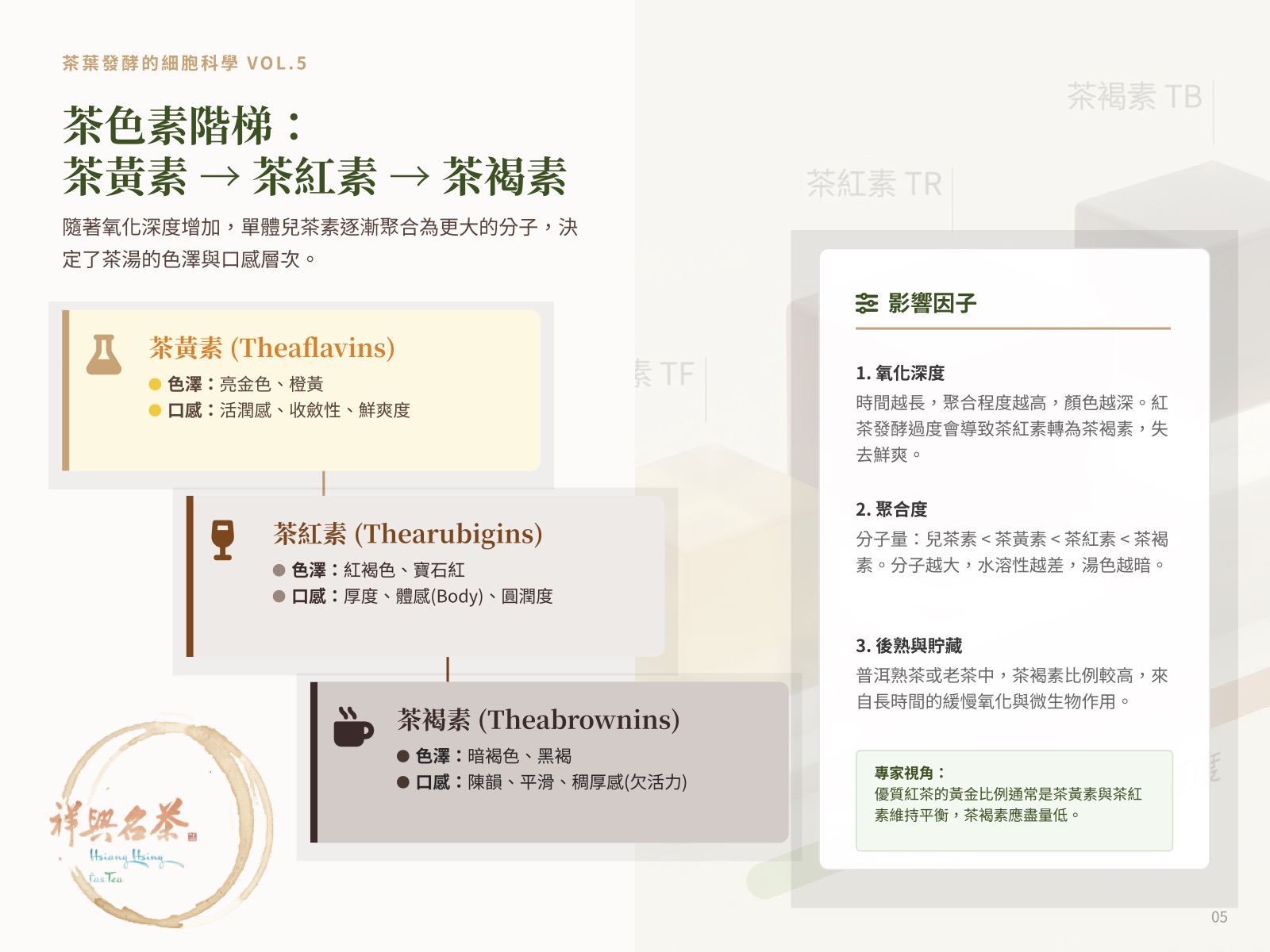
Theaflavin formation requires a pairing: one molecule of a dihydroxy catechin plus one molecule of a trihydroxy catechin, coupling in their quinone states and cyclizing into a benzotropolone structure — the source of the liquor's bright golden color and brisk, refreshing astringency.
``` EC + EGC → theaflavin (TF1) ☕ golden color, brisk freshness EC + EGCG → theaflavin-3-gallate (TF2a) ECG + EGC → theaflavin-3'-gallate (TF2b) ECG + EGCG → theaflavin-3,3'-digallate (TF3) ```
Thearubigins → Theabrownins: A Story That Keeps Darkening
Theaflavins are not stable in the fermentation environment. Over time they keep polymerizing, forming the complex thearubigins — reddish-brown polymers that account for over 60% of black tea's dry matter. With further oxidation, or by binding to proteins and cell-wall fragments, they convert onward into the deep-brown theabrownins, the main players behind pu-erh's aged aroma and mellow thickness.
The death of chlorophyll and the birth of theaflavins is a carefully choreographed relay — every molecule's sacrifice is the birth of the next color.
7. How Does Aroma Get "Released"?
Tea's aromas do not exist in the fresh leaf as free volatile molecules. In living cells, most of the finest aroma compounds are held in glycosidically bound form — boxed up and sealed away, giving off no scent at all.
Glycosidases Turn the Key
Once rolling breaks the cell structure, β-glucosidase can finally reach these glycoside precursors, and hydrolysis frees the aroma molecules from their sugar bonds:
- Linalool and geraniol → floral, fresh notes
- Methyl salicylate → a minty coolness
- Ionones → born from the oxidative cleavage of carotenoids, carrying a floral character
Amino Acids, Chemically Transformed
The free amino acids accumulated during withering are converted into aromatic aldehydes during fermentation via the Ehrlich pathway or Strecker degradation:
- Phenylalanine → phenylacetaldehyde (honeyed, rose-like)
- Leucine and isoleucine → key transitional compounds as grassy notes turn fruity
8. Dark Tea's Post-Fermentation: The Microbes Take Over
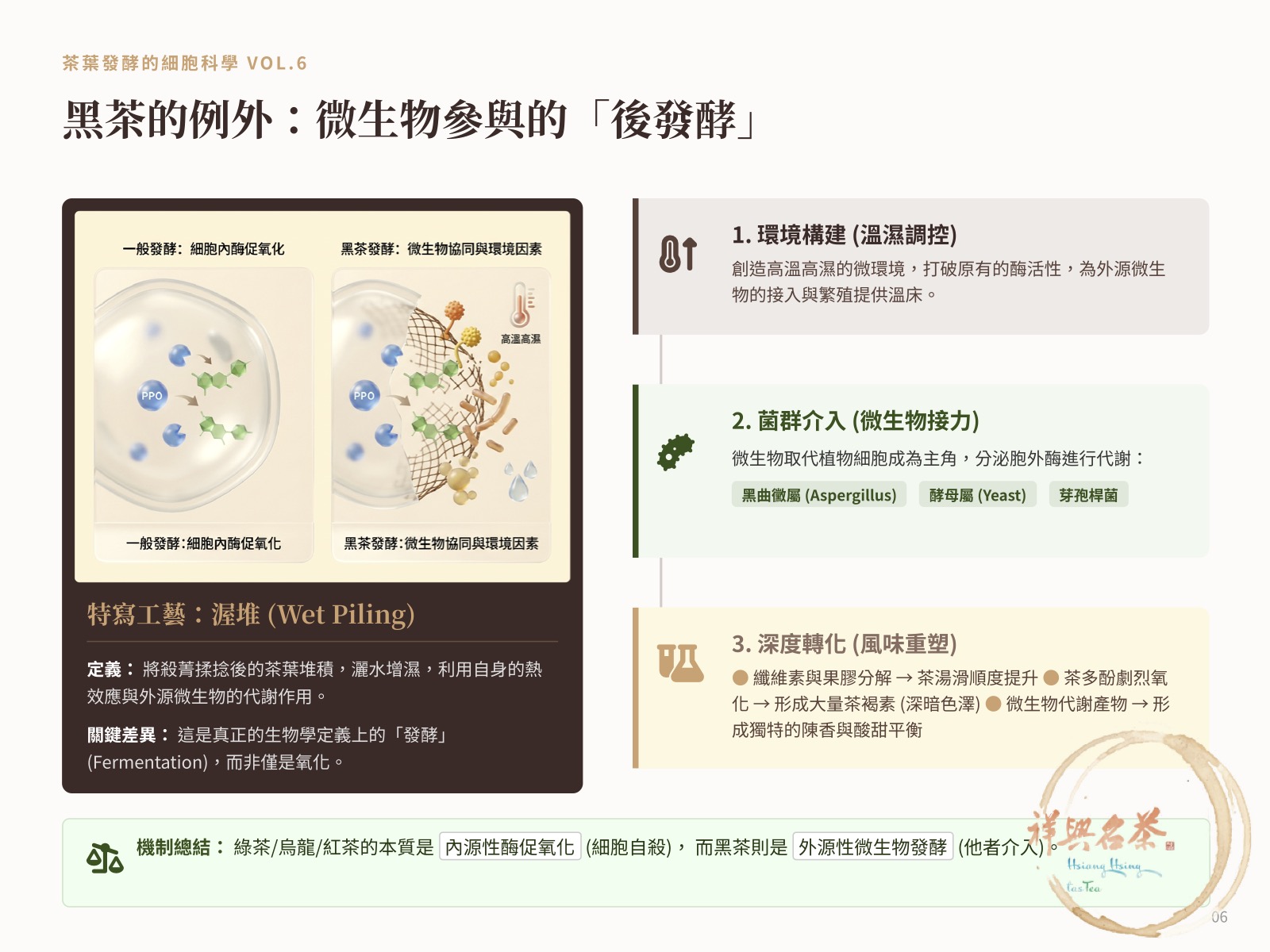
The pile fermentation ("wo dui") of dark teas such as pu-erh is nothing like black tea's process. It is microbe-driven: the cellular changes come not only from the leaf's own enzymes but from the powerful extracellular enzyme systems the microorganisms secrete.
An Extreme Environment Selects Its Own Microbes
Inside the fermenting pile, temperatures can climb to 50–65°C while humidity holds around 30%. These extreme conditions select for a particular microbial community:
Microbial group | Key extracellular enzymes | Effect on tea cells
Black molds (Aspergillus) | Cellulase, pectinase, tannase | Breach cell-wall integrity; hydrolyze ester catechins
Bacillus | Protease, amylase | Degrade residual proteins into amino acids
Yeasts | Esterase, alcohol dehydrogenase | Convert sugars into alcohols and ester aromatics
The Cell Wall, Rebuilt From the Ground Down
- Cellulose and hemicellulose: cellulases loosen the microfibril architecture of the cell wall, and cellulose crystallinity drops by as much as 50%. The leaves turn soft and easy to extract.
- Pectins: pectinases hydrolyze the pectin of the middle lamella, cells separate from one another, and the spent leaves take on their characteristic soft, sticky texture.
- Tea polysaccharides (TPS) accumulate: complex polysaccharides fragment into an abundance of small polysaccharides and monosaccharides, noticeably boosting the liquor's sweetness and its smooth, moistening feel.
Epilogue: One Cup of Tea, the Farewell of Countless Cells
Tea fermentation is a dramatic biochemical transformation of plant cells under physical injury and physiological stress. From the microscopic adjustment of membrane permeability during withering, to the wholesale collapse of cell structure under rolling, to the enzyme-catalyzed polymerization and reassembly of catechins, to the deep microbial degradation of cell-wall polysaccharides — every step carves the tea's final flavor with precision.
The essence of modern tea processing lies in the precise control of these cell-level changes:
- Tune rolling pressure and duration → optimize the contact area between PPO and catechins
- Control withering temperature → protect enzyme activity and shape how many aroma precursors accumulate
- Manage the pile's temperature and humidity → coax specific microbial communities into secreting the extracellular enzymes you need
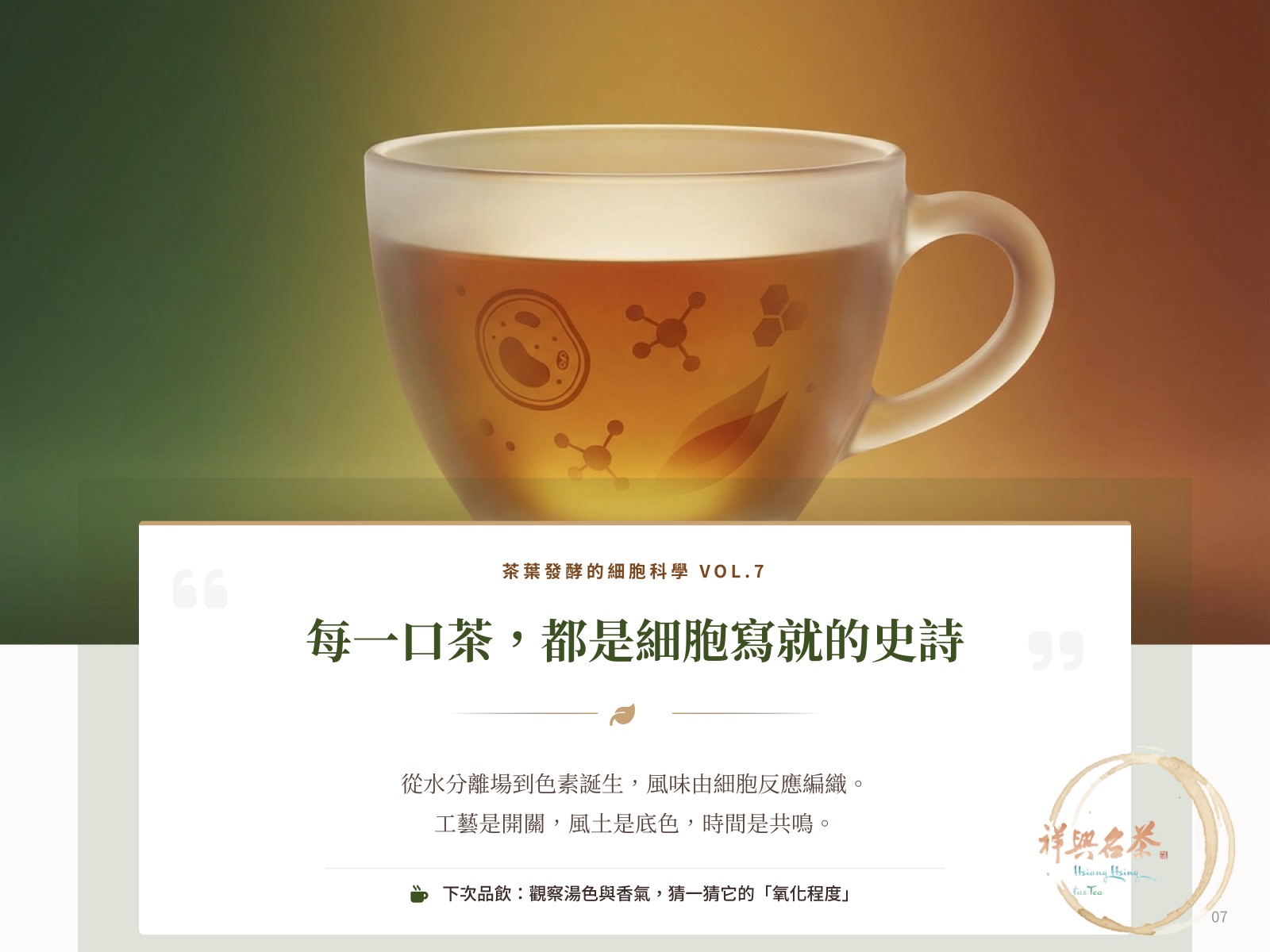
The next time you lift a cup of tea, spare a thought for the billions of cells that "gave themselves up" for it. Their collapse built the universe of flavor now resting in your hands.
This article draws on research in tea cell biology and biochemical metabolism, with principal sources including peer-reviewed papers from academic databases such as PMC and ResearchGate.