One Leaf, Six Teas: A Beginner's Guide to the Six Classes of Tea
Varieties & Types|Author:祥興茶行|Published:2026-03-26
Every tea in the world — green, white, yellow, oolong, black, or dark — starts from the same leaf. What separates them is how that leaf is made, and understanding the six classes is the clearest way into tea.
One Leaf, Six Teas: A Beginner's Guide to the Six Classes of Tea
Tea may be the gentlest gift the land has ever given us. A single small leaf, handled differently in the workshop, can turn into wildly different aromas and flavors — and together those transformations make up the rich, endlessly fascinating world of tea. Whether you are just starting down the path or have been steeping for years, learning the six classes of tea is the best possible starting point for understanding what is in your cup.
What Are the "Six Classes of Tea"?
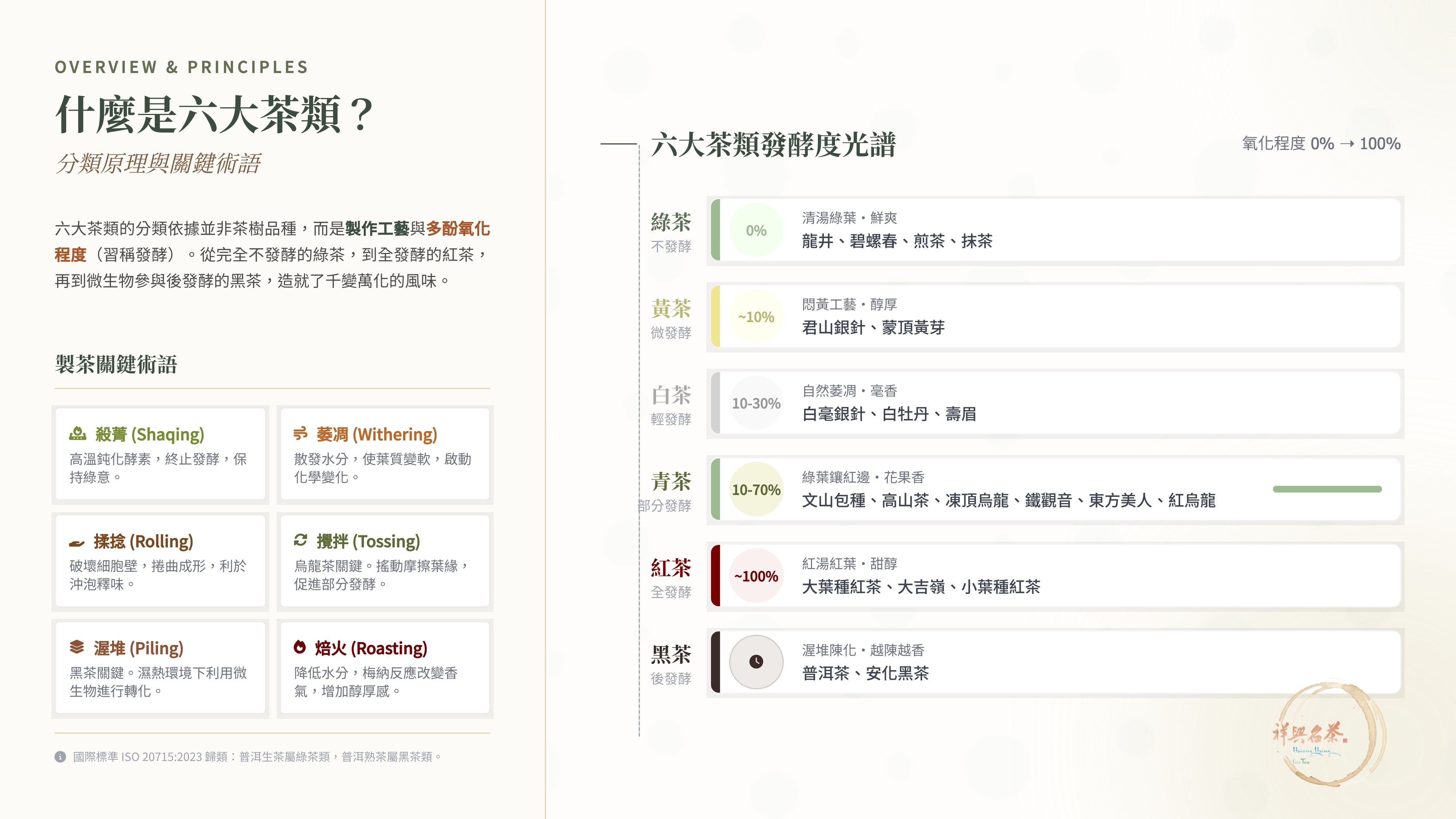
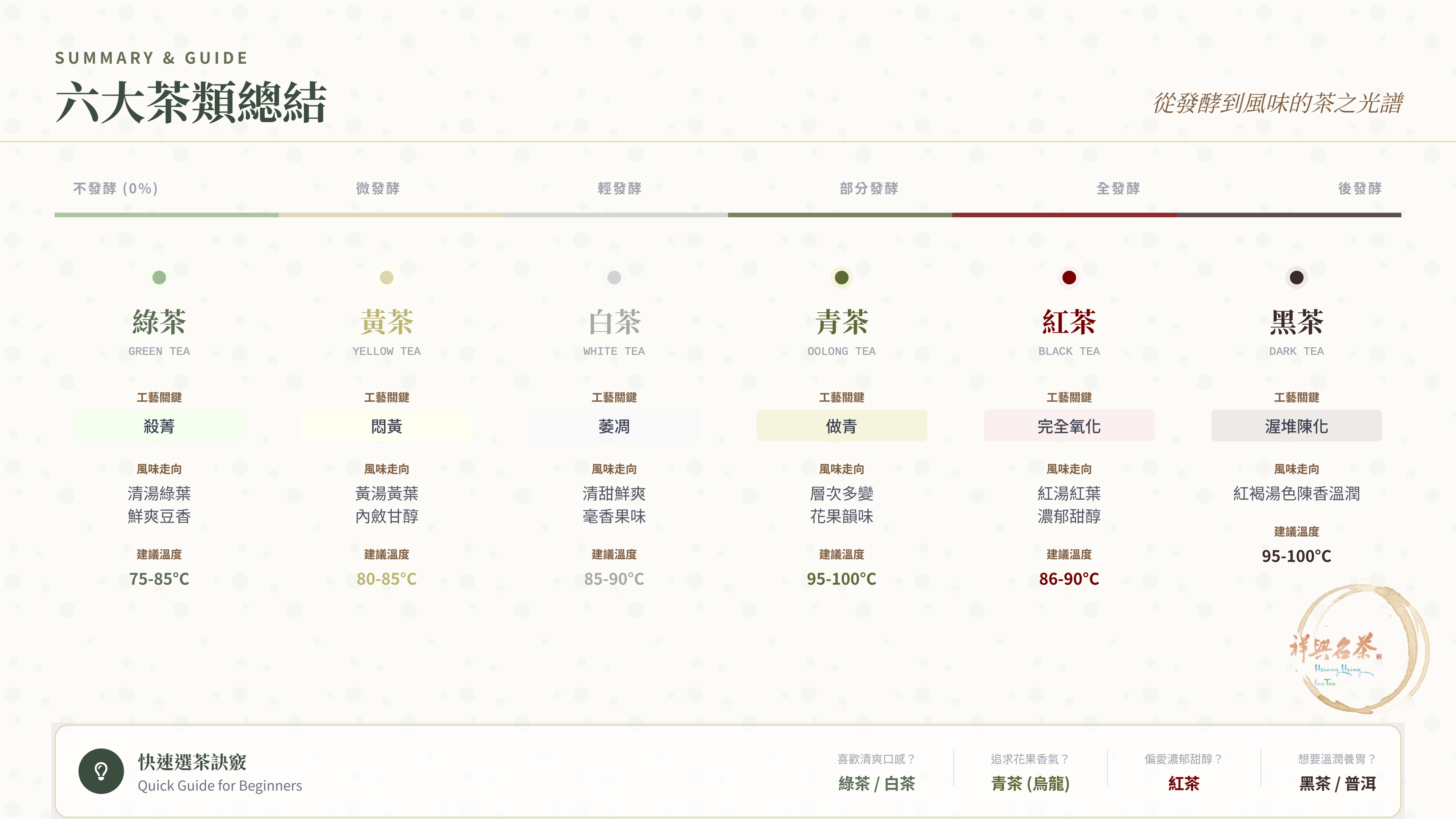
The six classes are not defined by where a tea is grown or which cultivar it comes from. They are defined by the degree of oxidation the leaf undergoes during processing. As a leaf moves from completely unoxidized to fully oxidized, its color, aroma, and taste shift along the way, giving us six great families: green, white, yellow, oolong (qing cha), black, and dark tea. The framework was proposed in the twentieth century by the Chinese tea scholar Chen Chuan (陳椽), and it remains the clearest map a newcomer can carry into the world of tea.
Six Classes, Six Personalities
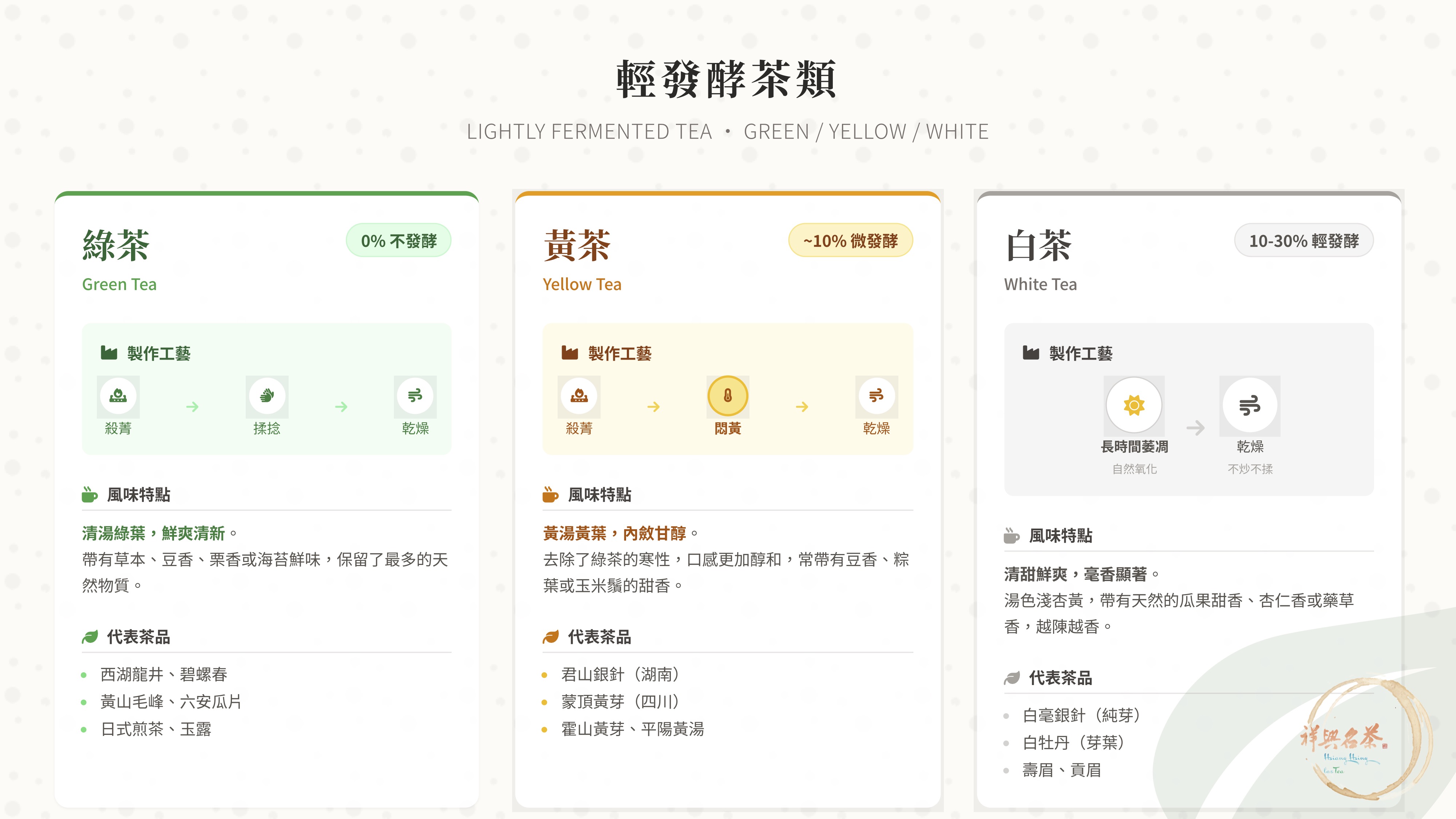
🌿 Green Tea | Unoxidized, Fresh as Spring Green tea has the simplest process of the six, and it stays closest to the leaf's natural character. Freshly picked leaves are quickly heated — the "kill-green" step — to halt oxidation, preserving the chlorophyll and a bright, grassy freshness. The cup is clean and delicate, often with notes of fresh beans or chestnut, and it suits drinkers who prefer a lighter touch. Classic examples include Longjing, Biluochun, and Japanese matcha.
🌸 White Tea | Lightly Oxidized, Understated and Natural White tea is made with an almost minimal hand: the leaves are simply withered and dried, with virtually no rolling, leaving the leaf in something close to its original state. The liquor is a pale, luminous yellow; the aroma is soft, with floral and honeyed sweetness; the body is light, yet the finish lingers surprisingly long. White tea is also famous for improving with age — well-aged white tea develops a distinctive herbal, medicinal depth and a rounder, mellower character.
🌼 Yellow Tea | Slightly Oxidized, Mellow and Rare Yellow tea is the scarcest of the six classes. Its process adds one crucial step — men huang, a gentle "sealed yellowing" — which gives the leaf a faint sweet fragrance and a smooth, easygoing taste. It sits somewhere between green and white tea: less of green tea's grassy edge, a bit more warmth and roundness. Because so little is made, it is rarely seen on the market, which only makes it more precious.
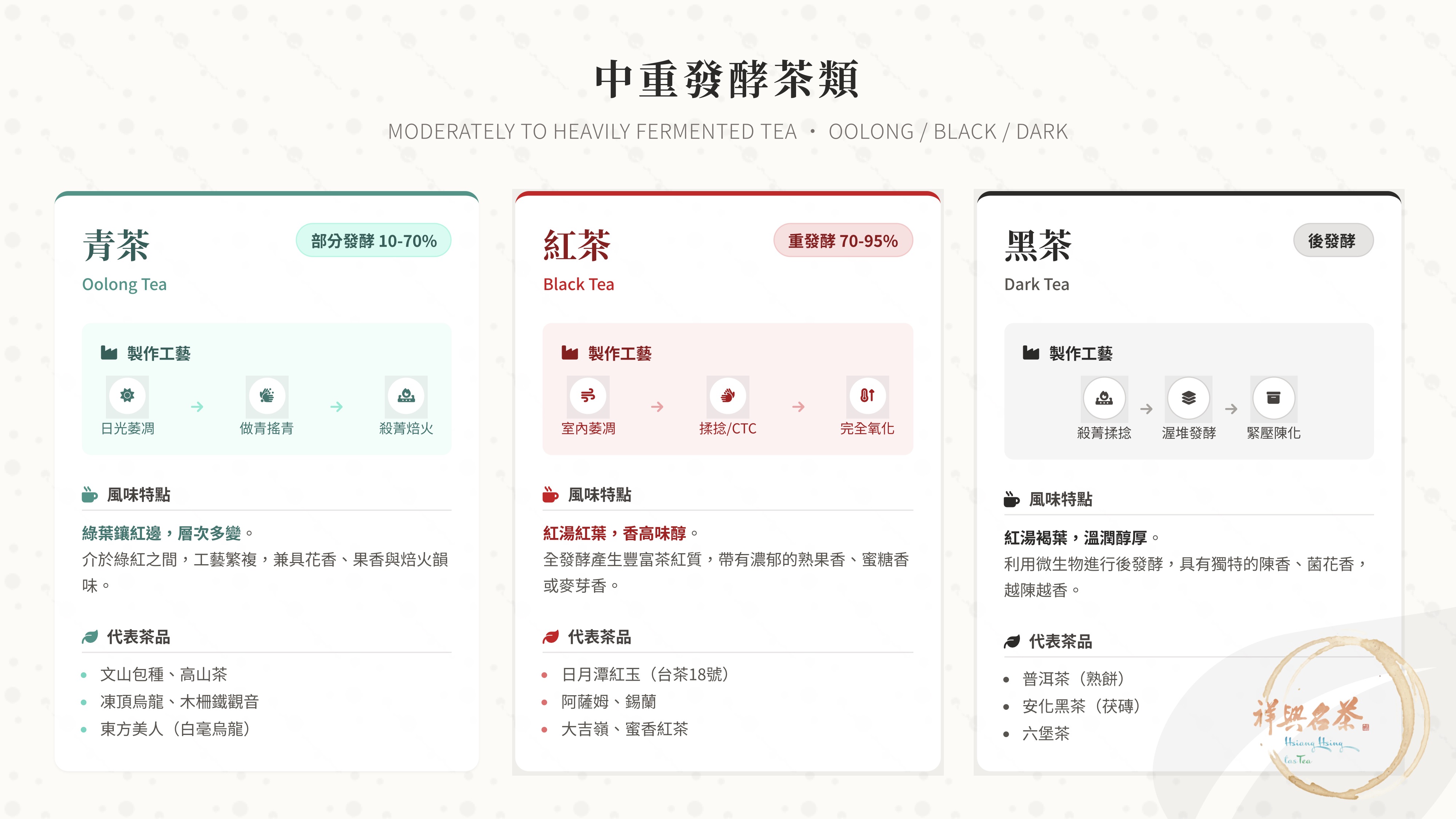
🍵 Oolong (Qing Cha) | Partially Oxidized, the Most Aromatic Family This is the class Taiwan is proudest of. Oxidation ranges anywhere from 15% to 85%, producing everything from the floral, honeyed lift of lightly oxidized oolongs to the deep, roasted warmth of darker styles — a stunning breadth of expression. Taiwan's high-mountain oolong, Oriental Beauty, and Muzha Tieguanyin all belong to this family, each with a vivid personality and captivating layers of its own.
🍂 Black Tea | Fully Oxidized, Rich and Warming Black tea is oxidized all the way through, brewing to a deep amber-red liquor with inviting fruit and malt sweetness. The mouthfeel is round and full — lovely with milk, and just as rewarding taken straight so you can savor its mellow depth. Taiwan's Sun Moon Lake black tea, Assam, and Darjeeling are all beloved examples.
🪨 Dark Tea | Post-Fermented, Depth Brewed by Time Dark tea is the only class that undergoes true microbial post-fermentation, and its most famous member is puer. Time is dark tea's most important craftsman: as the years accumulate, the liquor grows ever richer, taking on a distinctive aged fragrance and an earthy, grounded character — which is exactly why collectors fall so hard for it.
Simple Brewing Guidelines
Each class of tea asks for its own water temperature and steeping time. Keep these baselines in mind and every cup will taste better:
Tea Class | Suggested Water Temp | Suggested Steep Time
Green tea | 75–85°C | 1 minute
White tea | 85–90°C | 1.5 minutes
Yellow tea | 80–85°C | 1 minute
Oolong (qing cha) | 90–95°C | 55 seconds–1.5 minutes
Black tea | 90–95°C | 50 seconds
Dark tea | 95–100°C | Adjust to taste
💡 A gentle reminder: the better the leaf, the more forgiving it tends to be of small brewing mistakes. But brewing each pot with care — that is what tasting tea is really about.
In Closing | Finding the Cup That Belongs to You
Six classes of tea, six utterly different ways of being alive. Some people fall for green tea's quiet elegance, some for oolong's intricate layers; some find comfort in the warmth of black tea, and some feel the weight of time in the depths of a puer.
There is no ranking among teas — only the question of whether one meets you at the right moment.
Hsiang Hsing Tea has spent many years devoted to Taiwan's finest local teas, tending every step ourselves from garden to cup. If you are still searching for the tea that belongs to you, come step into our world, and let a single leaf tell you the answer, slowly.
For more tea knowledge, follow Hsiang Hsing Tea on Threads, LINE, and our official website.